









World





Technology

Best Crypto Presale Right Now: AlphaPepe Surges Past USD 3.2M as Whales Dump Top Altcoins for USD 0.034 Entry
Iran war fears are back, oil is climbing, and large altcoin holders are moving millions onto exchanges. Traders face another round of watching their portfolios react to headlines from the Middle East. Fresh attacks and fears of wider fighting have kept pressure on energy supplies and hopes of cheaper borrowing.
For investors hunting the next big winner, panic is also a time to look beyond the coins everyone already owns. The early entries behind past meme coin fortunes came before the exchange crowds arrived. AlphaPepe still offers that timing, with more than $3.2 million raised before its first public listing.
Early Holders Take Profits While New Buyers Hunt Their Entry
Lookonchain recently flagged an early Ethereum holder selling after a 128x return. Large Solana holders have also moved millions onto exchanges, while XRP whale deposits have raised concerns about further selling. Those transfers show funds moving into position for trading, rather than confirming every deposit became a sale.
The Ethereum holder’s gains began with an early purchase, years before today’s market. Buyers searching for the best crypto presale right now are hunting their own chance to enter before a project becomes widely known.
AlphaPepe is still at that earlier stage. ALPE is priced at $0.03436, and its first public exchange chart is ahead. Meanwhile, AlphaSwap Early Access is already live.
BNB Had Binance. ALPE Is Building Around AlphaSwap
BNB launched before Binance opened for trading. Its early utility centred on exchange fees and discounts, then expanded across a much larger ecosystem. Early buyers entered before that growth unfolded.
AlphaPepe is pursuing its own exchange-token model. AlphaSwap is live in Early Access, with an ex-Shibarium developer behind the AI DEX. The presale offers entry while the exchange grows and ALPE remains before listing.
Advanced AlphaSwap tools are being built around ALPE-powered access and trading credits. As those tools develop, the token gains a role inside the product. The long-term bet is on traders returning to AlphaSwap and using its token-linked features.
Conversational trading adds another way into that ecosystem, connecting AI requests with token discovery and swap preparation. Auto-Trade registration is already open. AlphaPepe is expanding the exchange before the first wave of public-market buyers arrives.
More than 12,700 holders have joined, with over 100 new holders arriving daily. The community is forming before exchange trading begins, while the raise has passed $3.2 million. Presale buyers are entering during that buildout.
The Fifth Exchange Reveal Is Still Ahead
Four CEX partnerships have already been announced, and the fifth partner will be revealed soon. Binance remains the main name buyers are watching. The next reveal puts another event ahead of ALPE’s first public trading cycle.
A new exchange partner expands the project’s reach. AlphaSwap supplies the longer-term product behind that exposure. AlphaPepe brings both into its presale, giving buyers an entry before the next partner becomes public.
The listing price starts at $0.08, compared with today’s $0.03436 entry. At $0.08, a $1,000 allocation bought at the current price will have a token value of roughly $2,328.
AlphaSwap’s rollout, growing ALPE utility and exchange expansion drive the 100x bull case. At that multiple, a $1,000 entry becomes $100,000 before fees. Achieving it would require substantial growth in adoption, demand and market value after launch.
The presale puts the entry before those milestones. Buyers receive their ALPE immediately after purchase, without waiting for a later claim window. The fifth exchange reveal and first public chart remain ahead.
Fewer Than 40 Bonus Crates Remain
Limited Bonus AlphaLabs is almost gone. Fewer than 40 mystery crates remain, offering up to 300% extra tokens. The final crates add an immediate allocation incentive while ALPE is still available at the current presale price.
Extra tokens increase the allocation without waiting for a market rally. The offer has a visible limit, with the remaining crates running down ahead of the next exchange reveal. Check the qualifying purchase details before completing the buy.
Conclusion
Iran war fears and rising oil prices are keeping traders nervous, while early holders take profits and large altcoin wallets move funds. AlphaPepe offers an earlier entry, with AlphaSwap Early Access live, an ex-Shibarium developer behind the DEX and more than $3.2 million raised.
ALPE remains available at $0.03436 before its first public exchange chart. The fifth partner reveal is approaching, and fewer than 40 bonus crates remain. Visit the official presale and check the remaining AlphaLabs offer before the crates run out.
VISIT ALPHAPEPE OFFICIAL WEBSITE
FAQs
What is AlphaPepe’s current presale price?
ALPE is priced at $0.03436, with a listing target starting at $0.08.
Is AlphaSwap already available?
AlphaSwap Early Access is live, and Auto-Trade registration is open.
What bonus remains available?
Fewer than 40 Limited Bonus AlphaLabs mystery crates remain, offering up to 300% extra tokens.
Disclaimer:
This article is for informational purposes only and does not constitute financial advice. Cryptocurrency investments carry risk, including total loss of capital.
All market analysis and token data are for informational purposes only and do not constitute financial advice. Readers should conduct independent research and consult licensed advisors before investing.
Crypto Press Release Distribution by BTCPressWire.com



National

Union Minister for Sports Dr. Mansukh Mandaviya Launches the Book ‘Life Skills to Reach the Top’ at IIT Delhi in a Jam-Packed Auditorium
Former Uttarakhand DGP Ashok Kumar and Ex-DRDO Scientist O.P. Manocha Co-Author a Book Offering Practical Tips for Success Beyond Academics
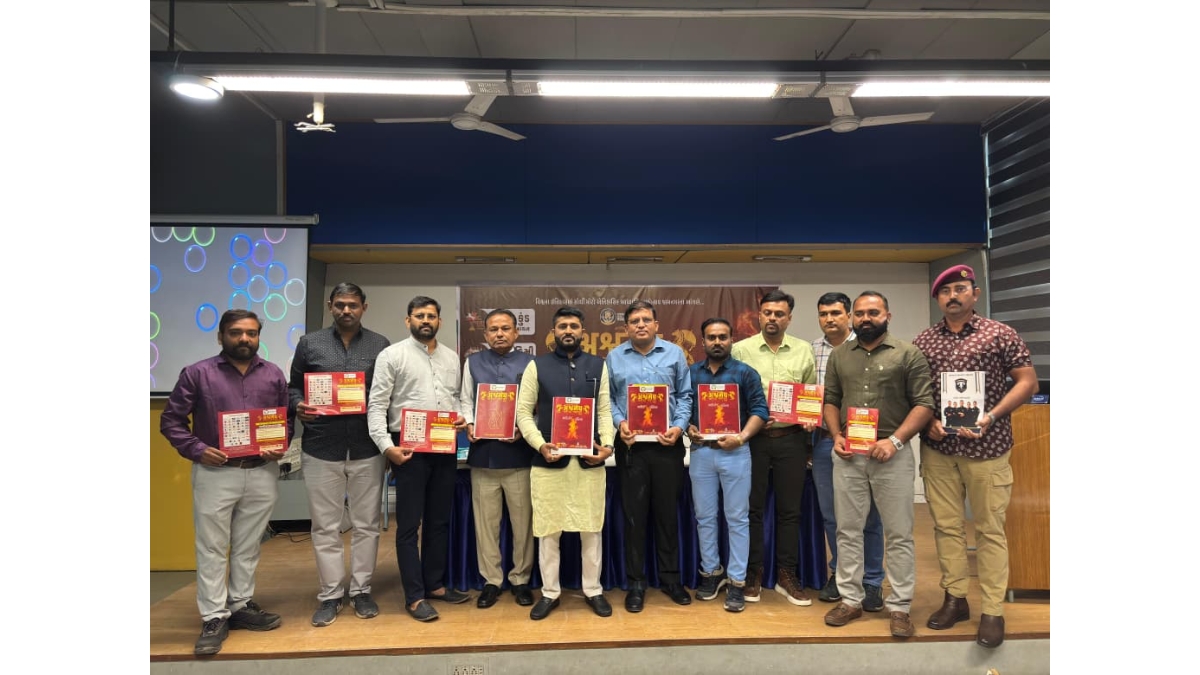
15th October 2026, New Delhi: Union Minister for Youth Affairs & Sports and Labour & Employment, Dr. Mansukh Mandaviya, launched ‘Life Skills to Reach the Top’, authored by former Director-General of Police (DGP), Uttarakhand, Ashok Kumar, and former DRDO scientist O.P. Manocha, at the Indian Institute of Technology (IIT) Delhi on Wednesday.
The launch was attended by Aman Gupta, Co-founder and Non-Executive Director of boAt and widely known for his appearance on Shark Tank India, as the Special Guest. Organised by S. Chand Publishing and the IIT Delhi Alumni Association, the event witnessed the participation of over 500 people.

The book, ‘Life Skills to Reach the Top’, seeks to bridge the gap between academic education and the practical skills required to navigate real-life challenges. Designed for students, competitive-examination aspirants, job seekers and young professionals, the book explores essential life skills including career planning, goal setting, time management, communication, interpersonal relationships, stress management, emotional intelligence, resilience, team building and decision-making etc. It combines scientifically grounded guidance, practical strategies and real-life examples to help readers make informed decisions, overcome challenges and realise their potential.

The book also introduces practical tools such as SMART goal-setting, SWOT analysis and the Japanese concept of Ikigai to help readers identify their strengths, align their aspirations with their abilities and make purposeful career choices. Drawing on the authors’ professional experiences and personal journeys, the book emphasises that success extends beyond academic qualifications and technical knowledge. Self-awareness, emotional intelligence, adaptability, effective communication, resilience and sound decision-making are equally important in navigating personal and professional challenges.
Dr. Mansukh Mandaviya, Union Minister for Youth Affairs & Sports and Labour & Employment, said that today’s youth have an important role to play in nation-building and that Gen Z would be the generation contributing to the vision of Viksit Bharat 2047. He emphasised that young people must equip themselves with strong life skills and values to help take India to the next level.

Speaking about the inspiration behind the book, Ashok Kumar, former DGP Uttarakhand, said that academic education and qualifications may help a person clear examinations, but they are not enough to achieve success in the higher echelons of life. Drawing on his experiences from a long career in the Indian Police Service, he explained that the book’s chapters are rooted in scientific principles and practical approaches. He further highlighted that these skills can help young people make informed career choices, respond effectively to challenges and navigate life with greater confidence and clarity.

Aman Gupta, Co-founder and Non-Executive Director of boAt, spoke about the challenge of identifying one’s true passion and finding a suitable path to success. He emphasised that entrepreneurship is not the only route to achievement, citing Google CEO Sundar Pichai as an example of how building a successful professional career within an organisation can be equally rewarding.

The launch ceremony was attended by several distinguished guests, including Gunwant Mongia, Managing Director, Mongia Steel; Dr. Rajesh Mohan, IPS, DCP, Central Faridabad; Professor Alaknanda Ashok; and Himanshu Gupta, Managing Director, S. Chand & Co. Ltd., the publisher of the book. The event brought together several bureaucrats, IIT Delhi students, IIT Delhi faculty members, IIT Delhi alumni and other distinguished guests.
If you object to the content of this press release, please notify us at [email protected]. We will respond and rectify the situation within 24 hours.